You open Chipon, tap your neighborhood, and see a number: 72. But what does that actually mean? Is 72 good? Should you worry? How is it calculated?
This guide breaks down everything behind the number.
The Scale
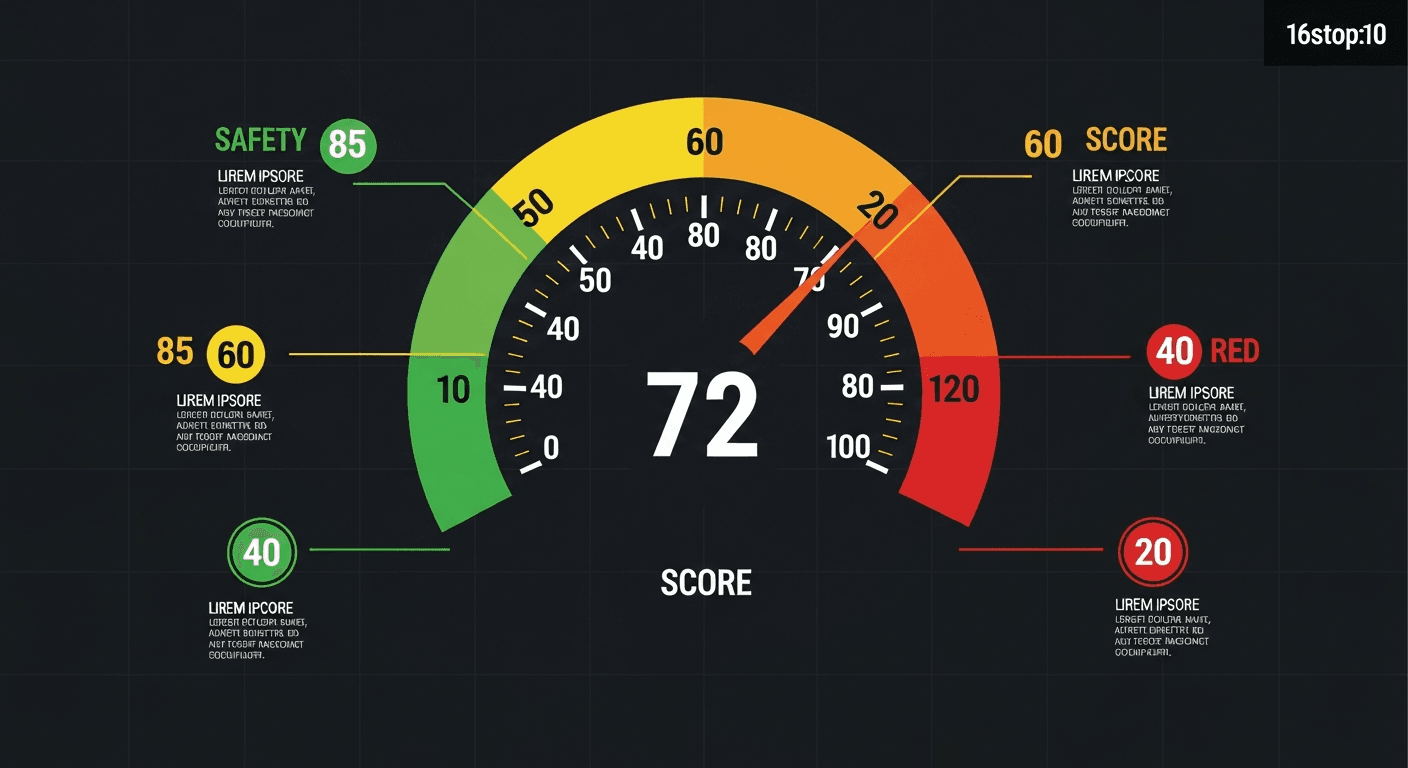
Chipon's safety score runs from 0 to 100, divided into four bands:
- 80-100 (Safe / Green): Low incident density. Strong community engagement. Well-lit, well-patrolled. You can move through this area with normal urban awareness.
- 60-79 (Moderate / Yellow): Some incident activity. Generally safe during daytime with increasing caution needed after dark. Most of Lagos falls in this range.
- 40-59 (Elevated / Orange): Notable incident patterns. Specific times and locations within the area carry real risk. Active route planning recommended.
- 0-39 (High Risk / Red): Significant and ongoing safety concerns. Multiple recent incidents across categories. Travel through this area requires deliberate planning and heightened awareness.
Importantly: a score of 60 doesn't mean the area is dangerous. It means there's more incident activity than a score-80 area. Most people live and work safely in score-60 neighborhoods every day — they just benefit more from checking the map before they move.
The Four Sub-Scores
Every neighborhood score is built from four equally-weighted sub-scores:
1. Crime Rate (25%)
Based on the density of crime-related incidents (armed robbery, suspicious activity, theft) within the neighborhood boundary over the past 90 days. Weighted by severity — a critical incident counts 4x more than a low-severity one.
2. Lighting (25%)
Derived from community reports about lighting conditions, satellite imagery analysis, and infrastructure data. Well-lit neighborhoods score higher because visibility is the single strongest deterrent to opportunistic crime.
3. Police/Security Proximity (25%)
Measures the density and responsiveness of official security presence — police stations, checkpoints, private security patrols. Areas with active, visible security score higher.
4. Community Engagement (25%)
The most unique sub-score: how active is the Chipon community in this area? Neighborhoods with more reporters, higher verification rates, and faster report-to-verification times score higher. Active communities are safer communities — and this sub-score captures that dynamic.
How the Score Updates
The neighborhood score isn't static. It recomputes:
- Daily: A full recalculation runs every 24 hours, incorporating all new data.
- Incrementally: When a new community report is filed, the score adjusts within minutes to reflect the new information.
- With decay: Old incidents lose influence over time. An armed robbery from 85 days ago barely affects today's score. One from yesterday affects it significantly.
The Trend Arrow
Next to every safety score, you'll see a trend indicator:
- ↓ Improving (green): The score has trended upward over the past 30 days. The area is getting safer.
- → Stable (gray): No significant change. Conditions are consistent.
- ↑ Worsening (red): The score has trended downward. New incident patterns are emerging.
The trend is often more actionable than the absolute score. A neighborhood at 65-and-improving deserves less concern than one at 70-and-worsening.
Common Misconceptions
- “A low score means I'll definitely have a problem.” No. A score reflects statistical probability across the area. Most people in a score-45 neighborhood go about their day without incident. But the odds of encountering an issue are higher.
- “A high score means I can let my guard down.” No. Even score-90 neighborhoods have incidents. The score means less frequent and less severe — not zero.
- “The score is biased against my area.” The score is math. It reflects reported incidents, weighted by verification and severity. If you believe your area is safer than the score suggests, the best response is to encourage community reporting — more data leads to more accurate scores.
How to Use Scores Practically
- Check your home neighborhood weekly. Not to stress — to stay informed about trends.
- Check destination neighborhoods before visiting. Especially unfamiliar areas and especially at night.
- Compare route options using scores. Chipon's route safety scoring uses the same data to score your specific path.
- Look at sub-scores, not just the total. A neighborhood with a strong crime rate score but a weak lighting score tells you specific information: it's fine during the day but needs caution after dark.
The safety score isn't a judgment on a neighborhood — it's a tool for the people who live in and travel through it. Use it to make better decisions, not to make assumptions.