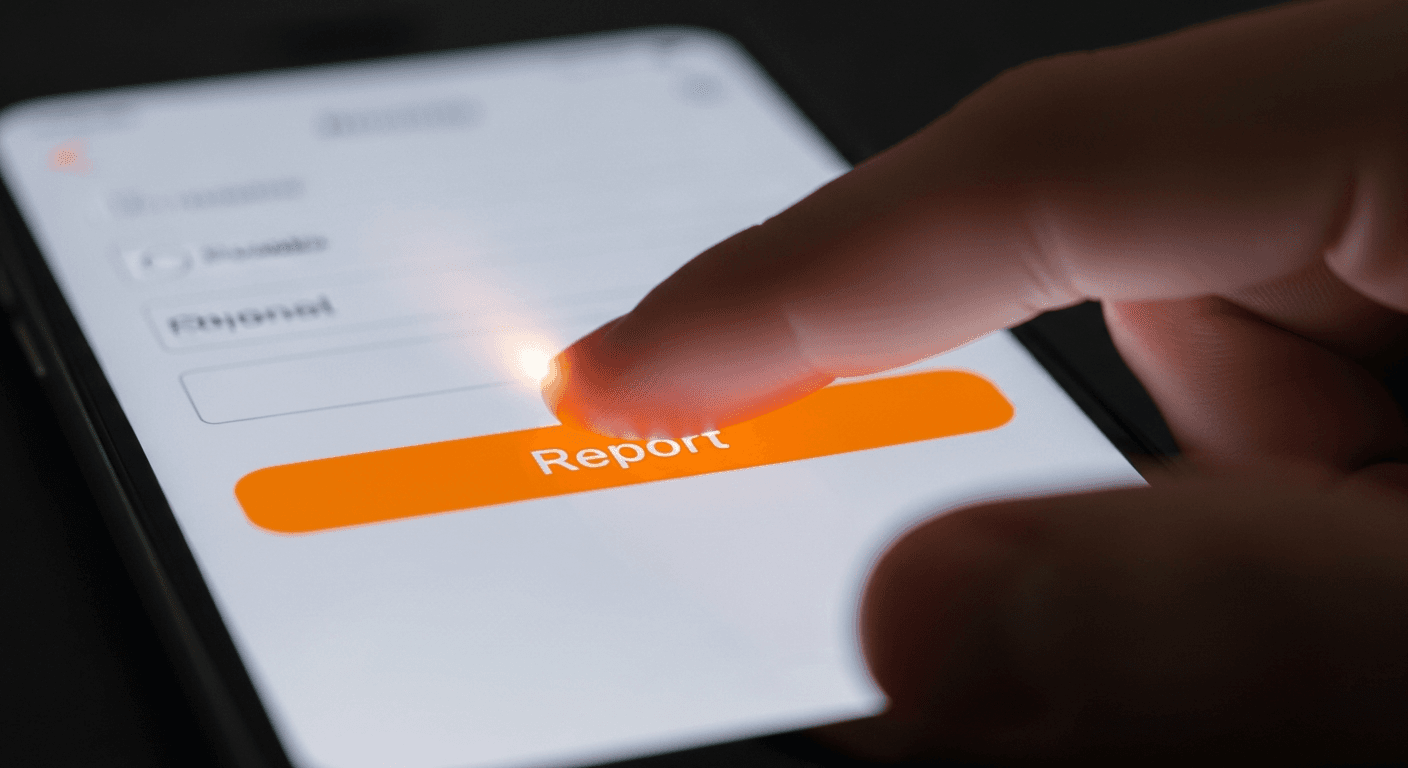
When someone witnesses an incident, they have a narrow window to report it. Adrenaline is high. Attention is split. Every second they spend fumbling with an app is a second they're not focused on their own safety.
We set ourselves an aggressive target: report an incident in under 30 seconds, from the moment you tap the button to the moment it appears on the map. Here's how we got there.
The Design Constraints
We started with three non-negotiable constraints:
- One-handed operation. Many reports are filed while in transit — in the back of a bus, walking quickly away from a scene, or sitting in a car. The entire flow must be completable with one thumb.
- Minimum viable information. We need enough data to be useful to other users, but not so much that the reporter gives up halfway. What's the smallest set of fields that produces an actionable report?
- Location automation. The reporter shouldn't have to type their location. GPS handles this. But GPS needs to be verified — not just trusted blindly.
The Flow: 4 Steps, 30 Seconds
Step 1: Category Selection (5 seconds)
One screen, 18 categories. Tap the category that matches: armed robbery, accident, fire, protest, flooding, checkpoint, power outage, suspicious activity, road closure, or other. Big touch targets, clear icons, no scrolling.
We tested text labels vs. icons alone. Icons alone were 40% faster, but accuracy dropped. Icons with short labels hit the sweet spot — fast recognition with confirmation.
Step 2: Severity (3 seconds)
Four big buttons: Critical, High, Medium, Low. Each has a color and a one-line description. No ambiguity about what each level means.
The default is pre-selected based on the category (armed robbery defaults to “High,” road closure defaults to “Low”). Most reporters accept the default, which saves time while maintaining accuracy.
Step 3: Description + Location (15 seconds)
A text field with a smart placeholder: “What's happening? (e.g., Armed men at junction near GTBank)”
Below it, the auto-detected address from GPS. The reporter can adjust if it's wrong, but 90% of the time it's accurate enough.
We enforce a minimum of 10 characters — enough for a useful description without being burdensome. Most reporters write 20-40 characters. Some write paragraphs. Both are fine.
Step 4: Submit (2 seconds)
Big gradient button. One tap. The report is live.
An optional photo capture appears after submission — so the report goes live immediately, and photos are added as supplementary evidence. This was a critical design decision: don't let photo capture delay the initial report.
What We Tested and Rejected
- Multi-step wizards — Too slow. Each screen transition costs 2-3 seconds of cognitive reload.
- Voice reporting — Promising but impractical. Background noise, accents, and the social awkwardness of narrating an emergency into your phone made it unreliable.
- Map pin placement — Requiring users to manually place a pin was our biggest early mistake. Drop rates were 60%. GPS auto-detection brought that to under 5%.
- Required photos — When we required a photo before submission, completion rates dropped by 45%. Making it optional post-submission restored them.
The Impact
Our median report completion time is 23 seconds. The 90th percentile is 38 seconds. Under real-world conditions — moving vehicles, stress, poor connectivity — this flow performs.
And because reports go live instantly, the value of each report starts accruing immediately. While the reporter is still adding a photo, other users are already being routed around the incident.
Speed in reporting isn't about convenience — it's about safety. A report filed 30 seconds after an incident is worth 10 reports filed an hour later. That's the principle every pixel of our reporting flow is built on.