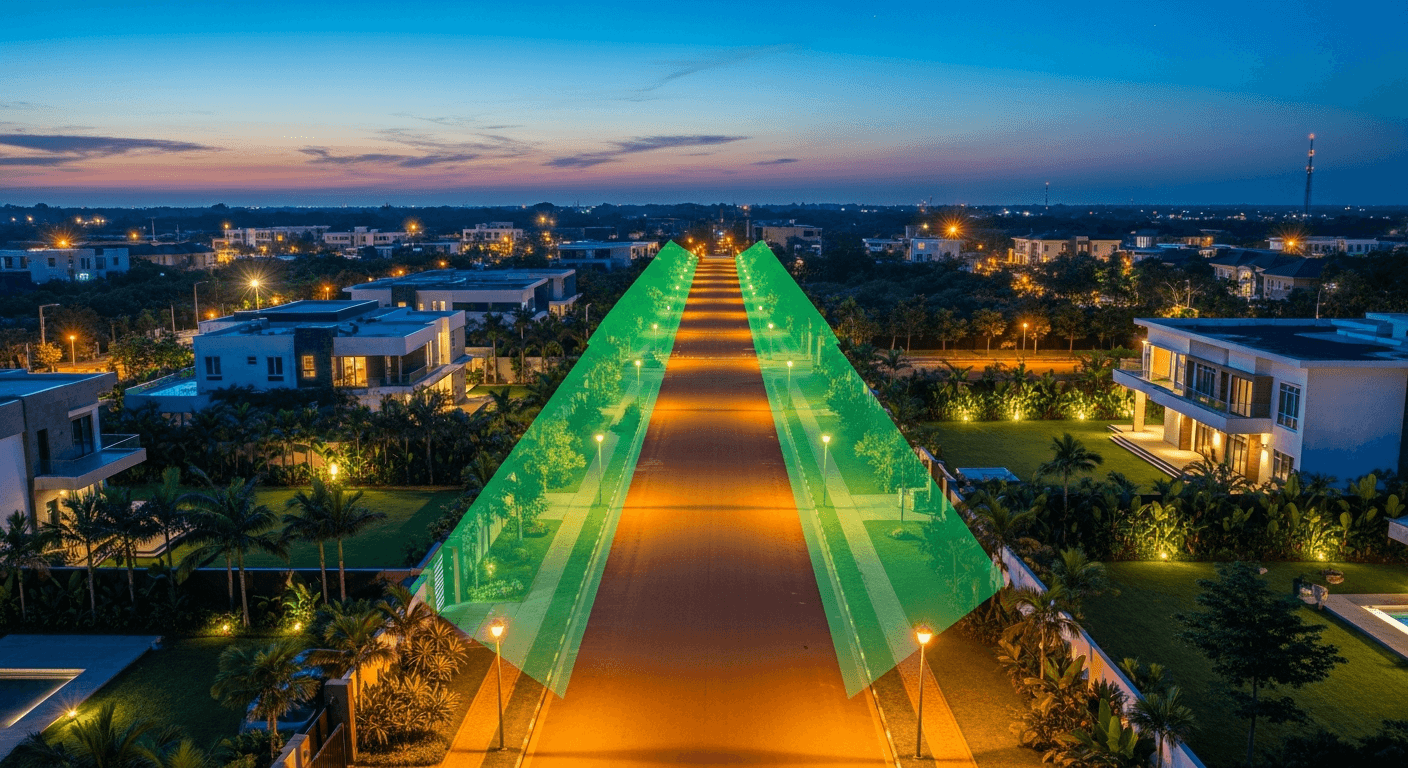
If you ask most Lagosians which neighborhoods feel safe, Lekki Phase 1 usually makes the list. But feeling safe and being safe are different things. We wanted to know: does the data agree with the perception?
The answer is yes — but the reasons are more interesting than you might think.
The Numbers
Over the past 90 days, Lekki Phase 1 has maintained a Chipon safety score between 82 and 87 (out of 100). That places it in the top tier of monitored Lagos neighborhoods. Here's the breakdown:
- Crime Rate Sub-Score: 85 — significantly lower incident density than the Lagos average of 62.
- Lighting Sub-Score: 78 — well-lit main roads, though some interior streets still lag.
- Police Proximity: 88 — multiple active security checkpoints and a responsive local police presence.
- Community Reports: 91 — highest engagement rate per capita of any Lagos neighborhood on Chipon.
The Surprise Factor: Community Engagement
The most interesting number is that 91 for community reports. Lekki Phase 1 doesn't just have fewer incidents — it has the most engaged community of reporters on the platform.
This creates what we call the Visibility Paradox: neighborhoods with more reporters actually appear to have more incidents initially (because more things get reported), but over time, the increased visibility deters criminal activity and accelerates response times.
In Lekki Phase 1, the average time between an incident occurring and it appearing on Chipon is 3.2 minutes. The Lagos-wide average is 14 minutes. When potential bad actors know that any incident will be broadcast to hundreds of nearby residents within minutes, the calculus changes.
What Makes It Work
Three structural factors contribute to Lekki Phase 1's safety profile:
1. Controlled Access Points
The neighborhood has a limited number of entry and exit roads, making it harder for hit-and-run incidents to succeed. Chipon data shows that neighborhoods with fewer access points consistently score 10-15 points higher on crime rate sub-scores.
2. Active Estate Security
Multiple residential estates within the area operate their own security networks. These private security teams are increasingly using Chipon as a coordination tool — monitoring the map for incidents near their perimeters and sharing intelligence.
3. Economic Incentive Alignment
Property values in Lekki Phase 1 are among the highest in Lagos. Residents and businesses have a direct financial incentive to maintain safety. This translates into higher reporting rates, better-maintained infrastructure, and more community investment in security.
The Trend Line
Lekki Phase 1's safety score has been on a steady upward trend for the past six months. The 7-day incident count has dropped from an average of 8 to 4. The 30-day count shows a 23% reduction compared to the same period last year.
This isn't just passive improvement — it's the result of a community that has adopted proactive safety intelligence as a norm.
Lessons for Other Neighborhoods
You don't need Lekki Phase 1's economics to replicate its safety model. The key ingredient is community participation. Every neighborhood that crosses the threshold of having at least 50 active Chipon reporters per square kilometer shows measurable improvement in safety scores within 90 days.
Safety is a network effect. The more people who report, verify, and stay informed, the safer everyone becomes.
Want to see your neighborhood's safety profile? Open Chipon, tap any area on the map, and explore the neighborhood intelligence panel. Your data contributes to the score.