If you could change one thing about urban safety in Lagos, what would it be? More police? Better roads? Tougher laws?
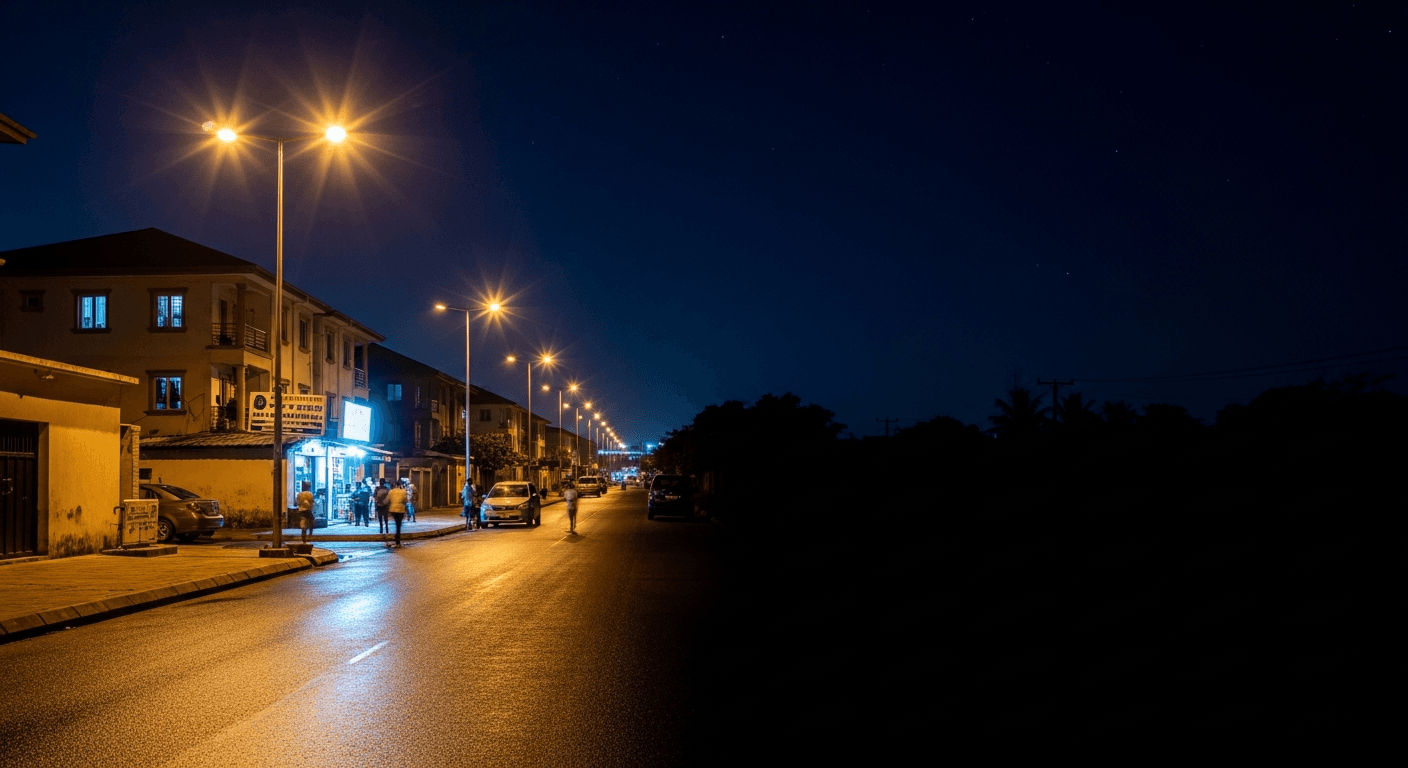
Research from around the world — and the patterns in our own community data — suggest a simpler answer: more street lights.
What the Research Shows
A landmark systematic review of 21 studies across the United States, United Kingdom, Brazil, and South Korea — spanning nearly 50 years of research — found that street lighting improvements are associated with a 14% reduction in total crime in treated areas compared with control areas. An earlier meta-analysis of 13 studies found an even larger effect: a 21% decrease in crime.
The most dramatic result came from a randomized controlled trial in New York City, where the provision of temporary street lighting in public housing developments led to at least a 36% reduction in index crimes, even after accounting for geographic spillover effects.
A 2024 study in Philadelphia, where 34,374 streetlights were upgraded across 13,275 street segments, found a 15% decline in outdoor nighttime street crimes and a 21% reduction in outdoor nighttime gun violence.
The evidence is consistent across continents and decades: lighting is one of the most effective and cost-efficient crime prevention interventions available.
Why Light Works
The mechanism is straightforward but powerful:
- Visibility deters crime. Most opportunistic crime — mugging, car break-ins, snatch theft — requires the cover of darkness. A well-lit street removes that cover.
- Witnesses multiply. On a lit street, people can see — and be seen. The number of potential witnesses increases, which changes the risk calculus for would-be criminals.
- Community presence extends. People stay outside longer on well-lit streets. Vendors, pedestrians, and residents extend their evening activity. This natural surveillance is the most powerful crime deterrent known.
- Accident prevention. Nigeria loses over 40,000 lives annually to road traffic crashes according to WHO estimates — one in every four road crash deaths in Africa occurs in Nigeria. Poor road lighting is consistently identified as a contributing factor, particularly for nighttime collisions at intersections.
The Lagos Lighting Map
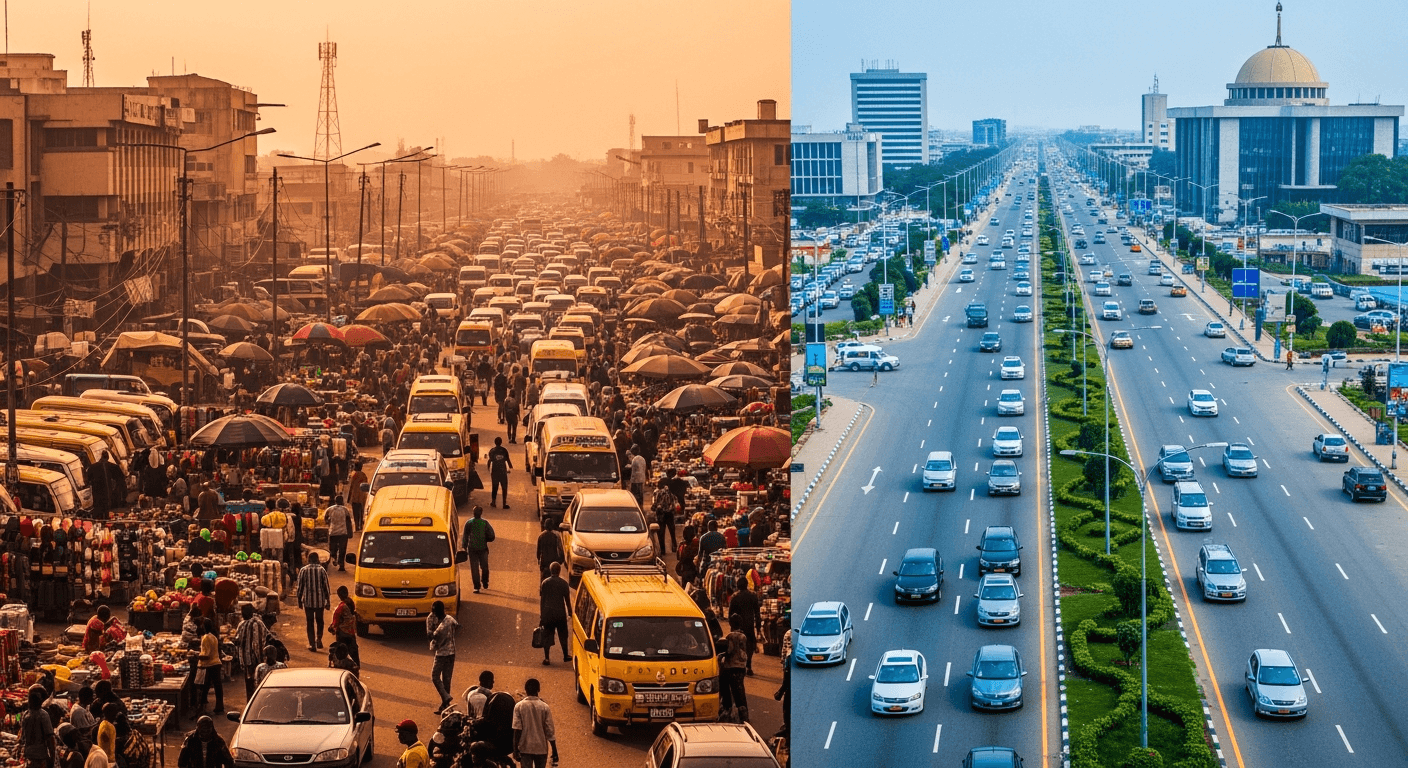
Based on community reports, news coverage, and on-the-ground observation, Lagos has a stark lighting divide:
Well-Lit Corridors
- Victoria Island main roads (Adeola Odeku, Adetokunbo Ademola) — commercial hub with better infrastructure investment and maintenance.
- Lekki Phase 1 primary streets — estate-level lighting maintained by residents and management companies.
- Allen Avenue, Ikeja — major commercial corridor with functional street lighting.
- Broad Street, Lagos Island — historic commercial center with government-maintained lighting.
- Ozumba Mbadiwe Avenue — Victoria Island artery benefiting from the Light Up Lagos initiative.
Poorly-Lit Danger Zones
- Apapa-Oshodi Expressway — streetlights have been vandalized and stolen. The Guardian reported that vandals systematically destroyed and carted away aluminum streetlights, cables, and copper wires on this corridor.
- Interior roads of Mushin and Oshodi — dense residential areas with chronic lighting deficits.
- Ikorodu Road (Ketu to Owode stretches) — long dark segments between commercial clusters.
- Satellite Town connector roads — infrastructure maintenance gaps leave these routes unlit.
- Lekki-Epe Expressway beyond Chevron — The Punch described this corridor as an “unending nightmare” for commuters, with inadequate lighting compounding construction and traffic hazards.
The Light Up Lagos Initiative
The Lagos State Government has recognized this crisis. The Light Up Lagos initiative, launched under Governor Sanwo-Olu, has targeted major corridors including the Lekki-Epe Expressway and Gbagada-Oshodi Expressway for lighting upgrades. While progress is real, the scale of the challenge — across thousands of kilometers of roads — means many neighborhoods remain in darkness.
The Economic Case
Street lighting is one of the most cost-effective safety interventions available. In Nigeria’s current market:
- A mid-range solar street light (200W-400W) costs ₦55,000-₦95,000 per unit.
- Installation (pole + labor) adds ₦15,000-₦40,000 per light.
- Total cost per light: approximately ₦70,000-₦135,000.
Compare this to deploying additional security personnel — which costs millions of naira monthly in salaries alone. The Philadelphia study demonstrated that upgrading 34,000 streetlights achieved a 15% crime reduction at a fraction of the cost of equivalent police deployment.
For estate associations and community groups, a cluster of 10 solar lights on a previously dark 1-kilometer stretch represents an investment of under ₦1.5 million — with international research suggesting meaningful crime reduction within months.
What You Can Do
If you live or work in a poorly-lit area:
- Report lighting issues on Chipon using the infrastructure category. We aggregate this data for local government advocacy.
- Engage your estate or community association about solar lighting installations. The return on investment — in safety, property values, and community confidence — is substantial.
- Use Chipon’s safety data when evaluating neighborhoods — nighttime incident patterns often reveal the lighting story before you ever visit the area after dark.
Sources:
- Welsh & Farrington (2022), “The Impact and Policy Relevance of Street Lighting for Crime Prevention” — systematic review of 21 studies, CrimRxiv
- Chalfin et al. (2022), “Reducing Crime Through Environmental Design” — NYC randomized experiment, NBER Working Paper 25798
- Doleac & Sanders (2024), Philadelphia street lighting citywide rollout evaluation
- WHO Global Status Report on Road Safety — Nigeria road crash mortality estimates
- The Guardian Nigeria, “Lagos: Vandals steal streetlights on Apapa-Oshodi Expressway”
- The Punch, “Unending nightmare: Lekki-Epe Expressway where commuting feels like hell”
- The Sun, “How Sanwo-Olu’s Light Up Lagos initiative is transforming economy, security, mobility”