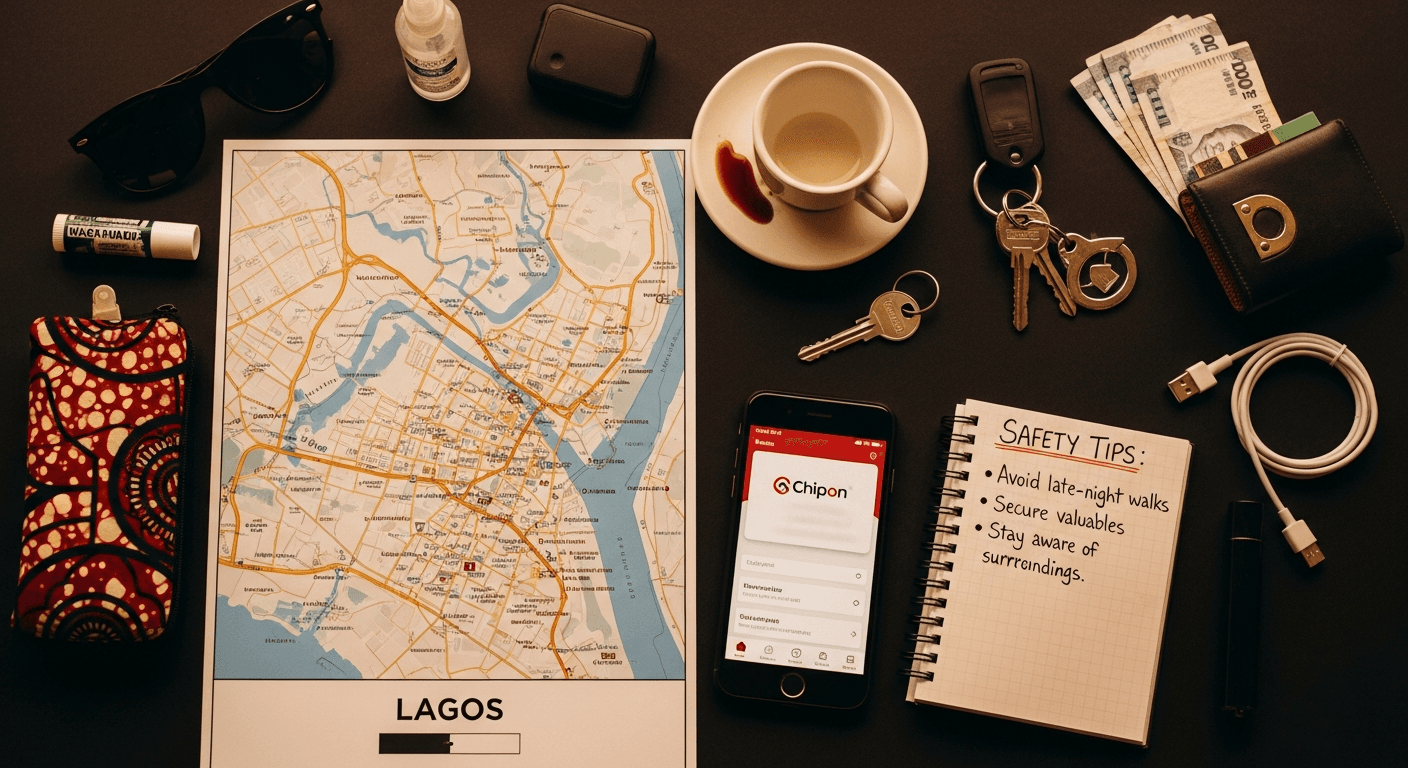
I spend my days looking at safety data. Incident reports, heatmaps, trend lines, verification rates — I swim in the numbers that describe how Lagos moves, where it hurts, and when it heals. After a year of this, the data has changed me.
Not into a paranoid person. Into a calibrated one.
Here are 10 things the data taught me that I wish someone had told me on day one.
1. The Most Dangerous Moment Is the Last 200 Meters
I used to think risk was about the journey. It's not. It's about the transition. The walk from where the Uber drops you to your front door. The stretch from the bus stop to your street. Our data shows a disproportionate number of residential robberies happen within 200 meters of the victim's home. You relax because you're “almost there.” That's exactly when to be most alert.
2. Tuesday Is the Safest Day of the Week
Monday has the stress hangover. Wednesday has the mid-week fatigue. Thursday starts the weekend drift. Friday and Saturday speak for themselves. But Tuesday? Tuesday is calm. Incident rates tend to be lower than the weekly average. Research confirms Tuesday typically has the lowest crime rates in urban areas. If you need to run errands in an area you're unfamiliar with, Tuesday is your day.
3. Rain Is a Safety Feature
Counter to what you'd expect, moderate rainfall reduces crime-related incidents. Heavy rain keeps people indoors — including would-be perpetrators. Our data shows a measurable drop in crime reports during sustained rainfall. Research published in the Journal of Criminal Justice found that a 1-inch increase in weekly precipitation is associated with approximately a 10% reduction in violent crime events. The exception: flooding-related incidents increase, obviously. But if you're choosing between traveling in light rain or waiting for a dry but dark evening, the rain might be the safer option.
4. The Best Security System Is a Nosy Neighbor
Neighborhoods with the highest Chipon community engagement scores have the lowest crime rates. Not because the app is magic — because the type of community that actively reports and verifies incidents is the type that creates natural surveillance. When your neighbor notices a stranger and reports it, that's more effective than any CCTV system.
5. Your Instinct Is Right About 80% of the Time
When I compare people's “gut feelings” about neighborhood safety with our actual data, there's a strong correlation. Your instincts are good — but the gap between instinct and data is where bad things happen. A street can feel safe because it's familiar while actually having a deteriorating trend. Data fills the gap between intuition and reality.
6. Small Incidents Predict Big Ones
An increase in “suspicious activity” reports in an area often precedes a spike in more serious incidents by 7-14 days. The scouts come before the operators. If you notice Chipon showing more yellow pins in your area than usual, it's worth paying extra attention even if nothing serious has happened yet.
7. The Fastest Route Is Almost Never the Safest
Google Maps optimizes for speed. Chipon's route scoring optimizes for safety. In our testing, the safest route adds an average of only 4 minutes to a Lagos journey — but runs through areas with 40-60% fewer incidents. Four minutes for dramatically better odds is a trade I make every single day.
8. Your Phone Is Both Shield and Target
Paradox: the device that gives you access to safety intelligence is also the most commonly stolen item in Lagos. I've learned to check Chipon before I leave, not while walking. And when I do need to check my phone on the street, I step into a shop or well-lit area first. Never at a traffic light, never at a bus stop, never while walking.
9. Verified Reports Are Gold. Unverified Reports Are Noise.
After a year of looking at the data, I treat verified reports (5+ confirmations) as near-fact and unverified reports as “worth noting but not worth panicking over.” The verification system works. Reports with multiple verifications and zero disputes have a very high probability of being accurate. An unverified single report might be real — or it might be someone who got scared by a stray dog.
10. Lagos Is Safer Than It Feels
This is the most important one. After a year of staring at incident data, I can tell you with confidence: the vast majority of people in Lagos go about their day without encountering any safety incident. The data looks scary in aggregate because it represents an entire city of 20+ million people. At the individual level, your odds of being directly affected on any given day are very low.
The purpose of safety intelligence isn't to make you afraid. It's to make you informed. And informed people live freer, not more fearful.
I came to Lagos to analyze data. The data taught me to live here. And I wouldn't want to live anywhere else.
— Ngozi, Lead Data Analyst, Chipon